


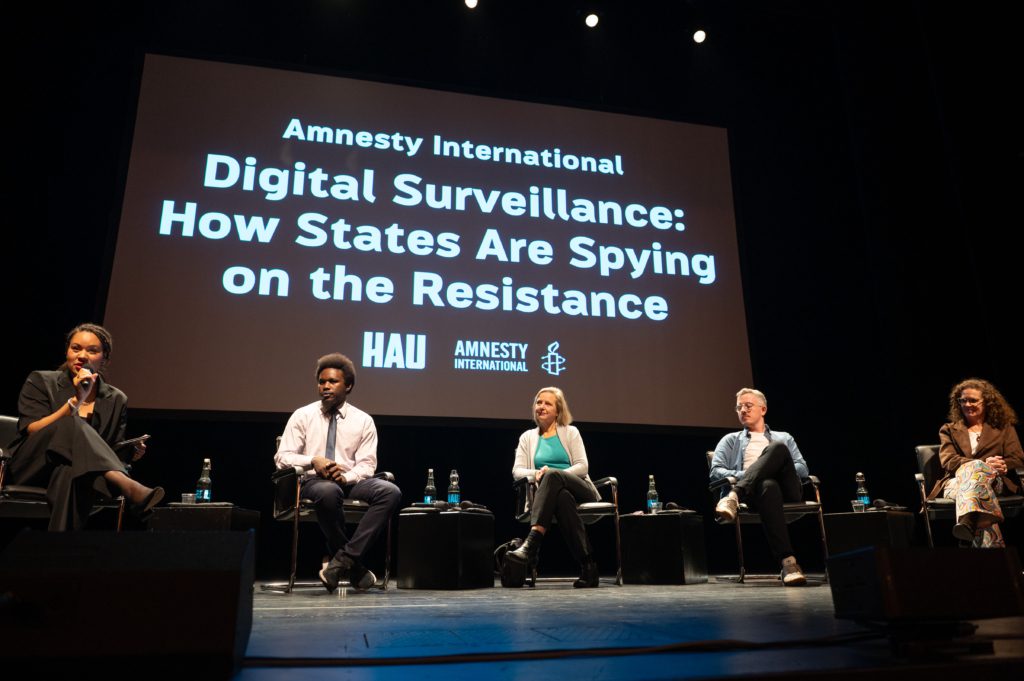
alt text: Panelists on stage. The speakers are, left to right, Yolanda Rother (moderator), David Yambio (activist and co-founder of Refugees in Libya), Anja Osterhaus (Executive Director of Reporters Without Borders Germany), Donncha Ó Cearbhaill (Amnesty International) and Sophie in ’t Veld (former Member of the European Parliament).
Authoritarian governments of the twentieth century might have required a network of thousands of employees and informants to track their opponents. Today, the same level of surveillance can be achieved with just a few clicks through spyware, a tool that can turn any smartphone into a 24/7 surveillance device.
In 2021, the Pegasus Project uncovered how governments worldwide were using NSO Group’s Pegasus highly invasive spyware to put human rights activists, political leaders, journalists and lawyers around the world under unlawful surveillance. Spyware, a tool that is inherently incompatible with human rights, became a weapon of choice for repressive governments seeking to silence, attack and crush civic space. Four years later, highly invasive surveillance continues to thrive, with the possibility of infiltrating every corner of our phones.
The effects on individuals are immense – privacy is breached, trust is eroded, and there’s little support to deal with the aftermath.
David Yambio, activist targeted by spyware in 2024
These impacts spillover to society, creating a chilling effect on civic space. That is why Amnesty International’s Security Lab, Amnesty International Germany and HAU Hebbel am Ufer organised the event Digital Surveillance – How States Are Spying on the Resistance.
At a time when digital surveillance is becoming the rule, we brought together in Berlin researchers, journalists, technologists and activists to collectively explore the impact of unlawful surveillance technologies on civil society and discuss what we must do to reclaim our human rights. On the day of the event, we hosted workshops, a digital security clinic and a panel discussion.
Workshops and Digital Security Clinic
Rebecca White, Donncha Ó Cearbhaill and Ruairi Nolan (Amnesty International) facilitated the first workshop of the day,Tackling Unlawful Surveillance: Security Lab Investigations. They explained why highly invasive spyware like Pegasus is inherently incompatible with human rights and how it affects individuals and communities, how Germany is linked to the spyware ecosystem, and how Amnesty International tackles spyware abuse. The session ended in an empowering note, prompting the participants to imagine they were a human rights group seeking to address the risks posed by surveillance technologies.
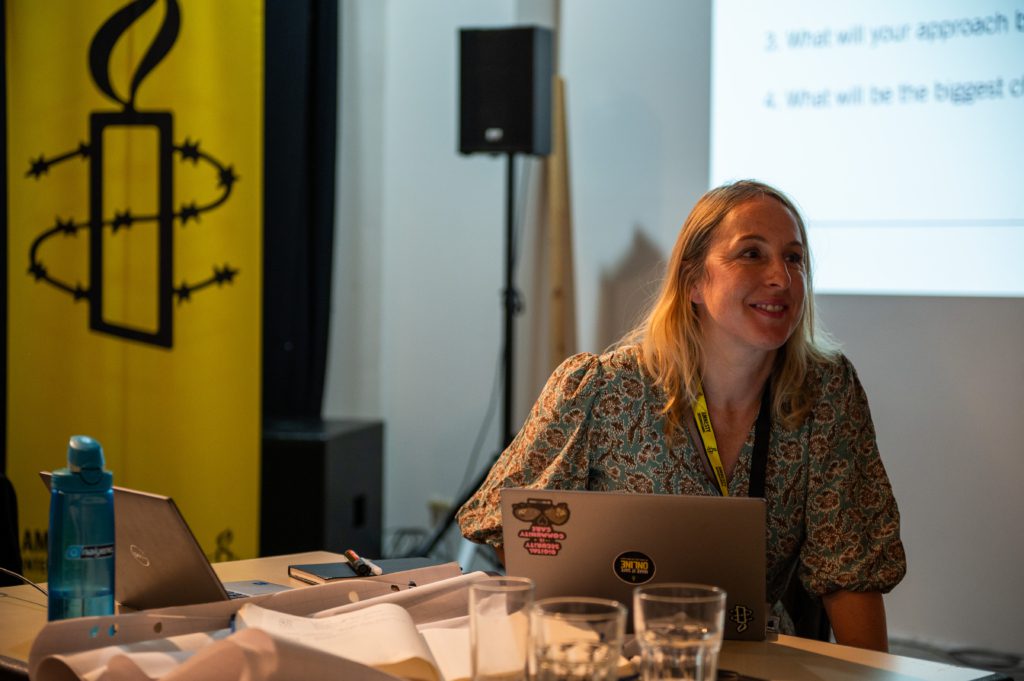
alt text: Rebecca White (Amnesty International) facilitating the workshop Tackling Unlawful Surveillance: Security Lab Investigations.
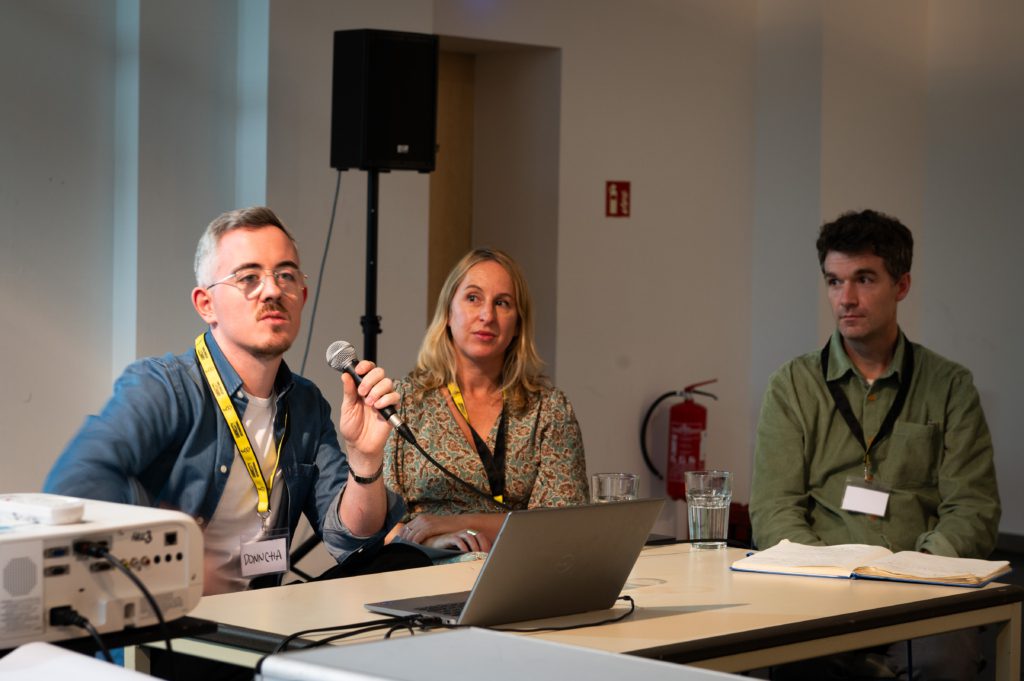
alt text: Donncha Ó Cearbhaill, Rebecca White and Ruairi Nolan (Amnesty International), facilitators of the workshop Tackling Unlawful Surveillance: Security Lab Investigations.
Jurre van Bergen (Amnesty International), Sophia Baumann (Paper Trail Media) and Marla Rivera (InterSec Lab) facilitated the second workshop, Inside a Cross-Border Investigation on Surveillance and Censorship Tech. Jurre, Sophia and Marla – researchers and journalists in the Great Firewall Export investigation – shared how they collaboratively analysed 100,000+ leaked documents to find how surveillance and censorship technologies, in particular a commercialised version of China’s Great Firewall, were developed, sold, and implemented across borders as a tool for repression.
In parallel to the workshops, participants could join a digital security clinic where digital security experts and organisations offered tailored recommendations, tools and support. Whether analysing device security or discussing the implications of upcoming EU legislation, the clinic fostered a supportive environment for learning, empowerment and protection.

alt text: Flyers from the digital security clinic reading “Speak to be about device checks” and containing a non-exhaustive list of potential spyware attack indicators.
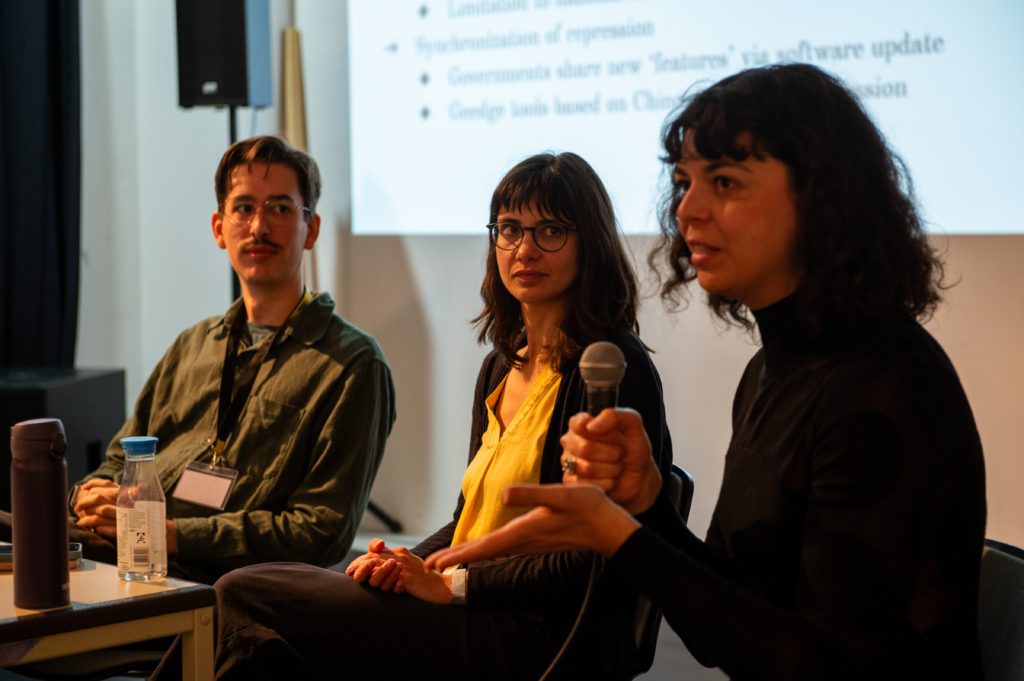
alt text: Jurre van Bergen (Amnesty International), Sophia Baumann (Paper Trail Media) and Marla Rivera (InterSec Lab), facilitators of the workshop Inside a Cross-Border Investigation on Surveillance and Censorship Tech
Panel discussion: What must we do to spot unlawful digital surveillance?
The doors of the main stage at HAU 1 opened with Data Sonification (2021), a video installation by Brian Eno and Forensic Architecture. While participants were taking their sets, they could see, hear and feel the frequency, intensity and impact of digital state terror enabled by NSO Group through Pegasus spyware.
Margarita Tsomou (HAU) and Christian Mihr (Amnesty International) opened the floor by reminding us that digital surveillance technologies continue to be built, sold and used by governments worldwide as a tool to destroy resistance. The panelists – Sophie in ’t Veld (former Member of the European Parliament), David Yambio (co-founder of Refugees in Libya and targeted by spyware), Anja Osterhaus (Executive Director of Reporters Without Borders Germany) and Donncha Ó Cearbhaill (Amnesty International) – then joined for an open, honest and thought-provoking conversation with moderation by Yolanda Rother. The debate centered around the evolution of spyware, the lived impacts of digital surveillance and the need for urgent stronger protections for those most affected, including direct support to the victims and strategic litigation.
Key takeaways
Digital Surveillance underscored the importance of bringing together diverse voices and focusing on lived experiences of unlawful digital surveillance to deeply understand its impacts and responses. The event also served as a timely reminder of the importance of transparency, accountability and community support in tackling spyware abuse and exploring pathways toward rights-respecting technologies. The conversations sparked in Berlin continue beyond the event, and the need to stay informed and connected remains essential.
Amnesty International and the organising team (Carolina Rocha da Silva, Christoffer Horlitz, Lena Rohrbach, Marianne Parrott) are deeply appreciative of everyone who made this event possible, in particular HAU Hebbel am Ufer for hosting and co-organising such an impactful day. Thank you to all the organisations and experts who joined us and contributed to the day, including Yolanda Rother, Sophie in ‘t Veld, Anja Osterhaus, David Yambio, Sophia Baumann, Marla Rivera, Reporters Without Borders (RSF), Tactical Tech and Access Now.
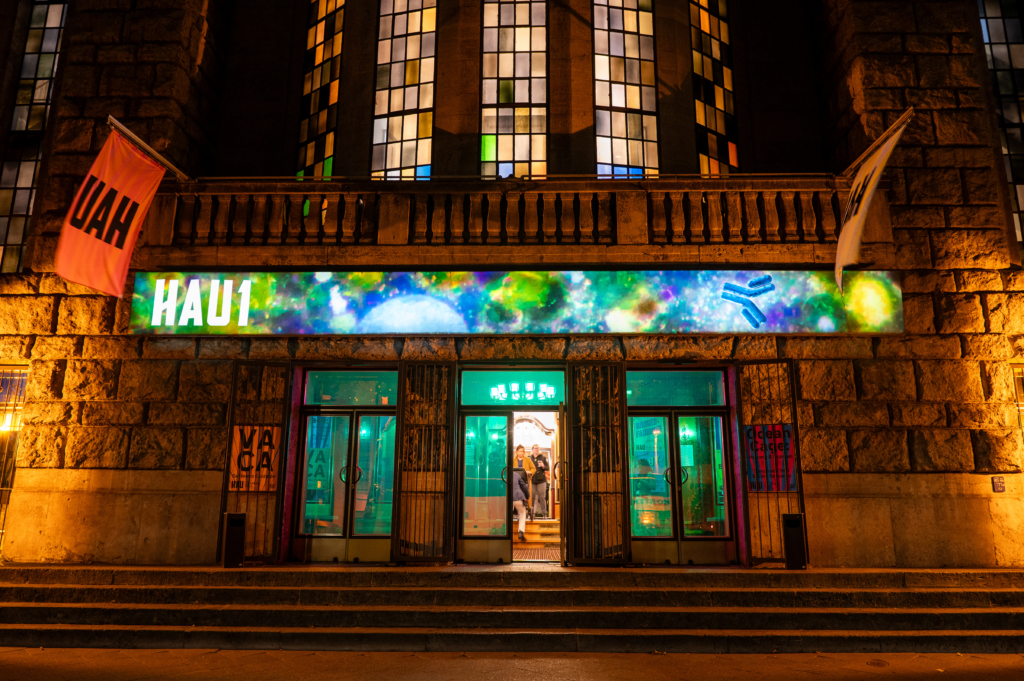
alt text: Entrance of HAU 1 in Berlin, the event’s venue.